Solarium
Discover the perfect tan with ICON GYM!
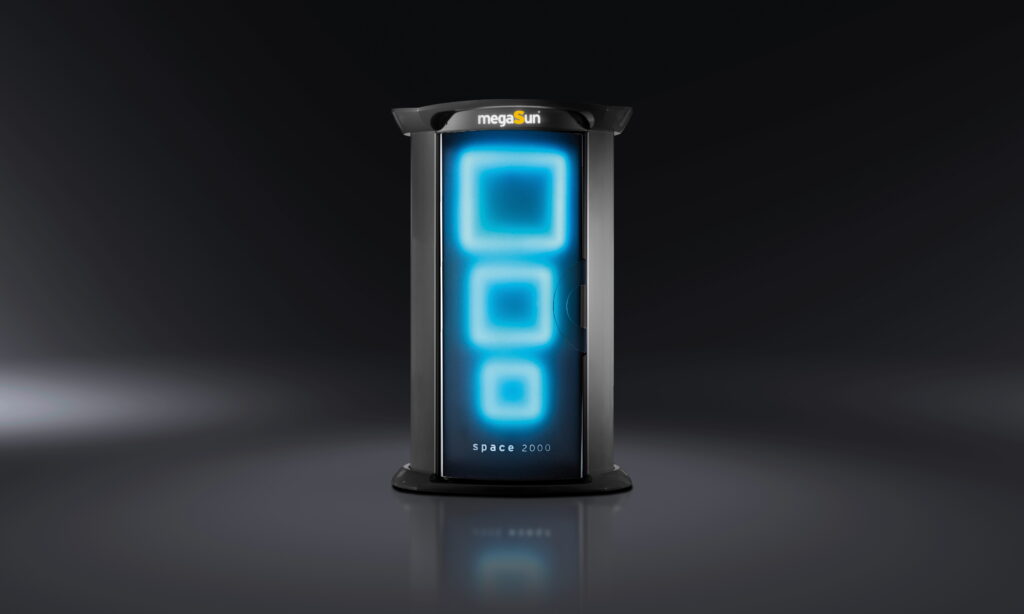
More defined muscles, sleeker body lines and a year-round tan — all of it is possible at ICON GYM! Our clients can use the market-leading MegaSun Space 2000 sunbeds, which ensure safe and even tanning.
Every session is not only a way to achieve the ideal tan, but also a pleasant moment of relaxation. Advanced technology and adjustable power let you tailor each session to your individual needs, so your experience is always comfortable and effective.
FAQ
How often can I use the solarium?
- Unlimited use*
- At least a 48-hour break between sessions
- No more than 2 sessions per week
- Maximum session length — 15 min.
- We follow the applicable Lithuanian hygiene standard HN 71:2009 “Solariums. Health safety requirements”.
How do I activate the solarium membership?
Once you have purchased a membership that includes the solarium:
- Come to the gym.
- Next to the solarium cabins you will find a tablet for selecting your session.
- Choose the desired tanning session length (follow the recommendations for your skin type).
- Tap your access card on the reader or use your fingerprint.
Who can use the solarium?
The solarium may be used by persons aged 18 and over who have purchased a membership that includes the solarium service.
Solarium usage rules
- Before tanning, your body and face must be clean.
- Cosmetics intended for protection against sunlight must not be used in the solarium.
- Protective goggles must be worn during the session.
- Additional sunbathing outdoors is not recommended on the same day as a solarium session.
IMPORTANT! When using the solarium you must follow the applicable Lithuanian hygiene standards and the equipment manufacturer’s instructions. First, determine your skin type by completing the provided questionnaire. Then, when choosing the session length, follow the manufacturer’s recommendations for your specific skin type.
Based on Annex 1 of HN 71:2009 “Solariums. Health safety requirements”.
SKIN TYPES AND HOW LONG YOU MAY TAN
Skin type I. Very fair, freckled skin. Blond or reddish hair.
Light blue, light grey or light brown eyes. The skin always burns (reddens) but does not tan (does not go brown).
1
SESSION |
2
SESSION |
3
SESSION |
4
SESSION |
5
SESSION |
6
SESSION |
7
SESSION |
8
SESSION |
9
SESSION |
10
SESSION |
| 5 min |
6 min |
7 min |
7 min |
8 min |
9 min |
9 min |
10 min |
10 min |
11 min |
Skin type II. Fair skin. Blond, reddish or brown hair.
Blue, grey, light brown or brown eyes. The skin burns (reddens) and hardly tans.
1
SESSION |
2
SESSION |
3
SESSION |
4
SESSION |
5
SESSION |
6
SESSION |
7
SESSION |
8
SESSION |
9
SESSION |
10
SESSION |
| 5 min |
7 min |
7 min |
8 min |
9 min |
10 min |
11 min |
12 min |
13 min |
14 min |
Skin type III. Fair, yellowish or light brown skin. Dark brown hair.
Dark brown eyes. The skin rarely burns and tans gradually.
1
SESSION |
2
SESSION |
3
SESSION |
4
SESSION |
5
SESSION |
6
SESSION |
7
SESSION |
8
SESSION |
9
SESSION |
10
SESSION |
| 5 min |
7 min |
9 min |
10 min |
11 min |
12 min |
13 min |
14 min |
15 min |
15 min |
Skin type IV. Dark skin and hair. Dark brown eyes.
The skin almost never burns and tans quickly and deeply.
1
SESSION |
2
SESSION |
3
SESSION |
4
SESSION |
5
SESSION |
6
SESSION |
7
SESSION |
8
SESSION |
9
SESSION |
10
SESSION |
| 5 min |
8 min |
10 min |
11 min |
12 min |
13 min |
14 min |
15 min |
15 min |
15 min |
Lithuanian hygiene standard HN 71:2009
“Solariums. Health safety requirements”
Annex 1
INFORMATION FOR SERVICE USERS
1. Before using the solarium, consult a dermatologist or general practitioner regarding your skin type, any medication you take and your body’s possible reaction to ultraviolet radiation.
2. When tanning in the solarium, it is not recommended to use cosmetic products that enhance (accelerate) tanning.
3. At the service user’s request, the solarium employee responsible for providing the service must issue and complete a Solarium Service Card. It is recommended to fill in the card before every tanning session.
4. The solarium should not be used by:
4.1. persons with skin type I–II. If persons with skin type I or II decide to use the solarium, the first session must be no longer than half the duration recommended by the equipment manufacturer;
4.2. persons with many moles or freckles;
4.3. persons who have suffered severe sunburn in the past;
4.4. persons with malignant skin changes;
4.5. persons who have had skin cancer or have family members who have had skin cancer;
4.6. persons taking medication that increases skin sensitivity to ultraviolet rays (e.g. antibiotics, antidepressants, sulfonamides, diuretics, psoralens, vitamin A, retinoids, diabetes medication, antifungal medication, contraceptives, etc.);
4.7. pregnant women;
4.8. persons with skin diseases (systemic connective tissue diseases, cutaneous lupus erythematosus, scleroderma), tuberculosis, diabetes, cataracts, thyrotoxicosis or infectious diseases;
4.9. persons with pacemakers or transplanted organs.
5. Tanning rules:
5.1. when tanning, the skin of the body and face must be clean, dry and free of creams, lotions, deodorants or other cosmetics;
5.2. cosmetic products that protect against natural sunlight must not be used in the solarium;
5.3. protective goggles must be worn;
5.4. the session length and regime must be chosen according to your skin type, skin sensitivity and the tanning duration and regime recommended by the solarium (lamp) manufacturer;
5.5. the first session must not exceed 10 minutes;
5.6. tanning sessions must not exceed twice per week or more than 30 times per calendar year;
5.7. there must be a break of at least 48 hours between two sessions;
5.8. women are advised to cover their breasts while tanning;
5.9. it is recommended to cover hair, scars and tattooed areas, as tattoo ink may fade or cause an allergic reaction;
5.10. do not sunbathe outdoors on the same day after a solarium session;
5.11. if persistent swelling, rashes, wounds or pigmented moles appear on the skin, consult a doctor.
6. Consequences of excessive tanning:
6.1. skin burns;
6.2. eye damage (photokeratitis, photoconjunctivitis, cataracts);
6.3. premature skin ageing;
6.4. weakened immune system and the associated higher risk of infectious diseases;
6.5. skin cancer, malignant skin changes.
SKIN TYPES AND SKIN REACTION TO ULTRAVIOLET RAYS
| Skin type |
Description |
Reaction to ultraviolet rays |
| 1 |
2 |
3 |
| I |
Very fair, freckled skin. Blond or reddish hair. Light blue, light grey or light brown eyes. |
The skin always burns (reddens) but does not tan. |
| II |
Fair skin. Blond, reddish or brown hair. Blue, grey, light brown or brown eyes. |
The skin burns (reddens) and hardly tans. |
| III |
Fair, yellowish or light brown skin. Dark brown hair. Dark brown eyes. |
The skin rarely burns and tans gradually. |
| IV |
Dark skin and hair. Dark brown eyes. |
The skin almost never burns and tans quickly and deeply. |
This translation is provided for convenience. In case of any discrepancy, the Lithuanian original and hygiene standard HN 71:2009 prevail.